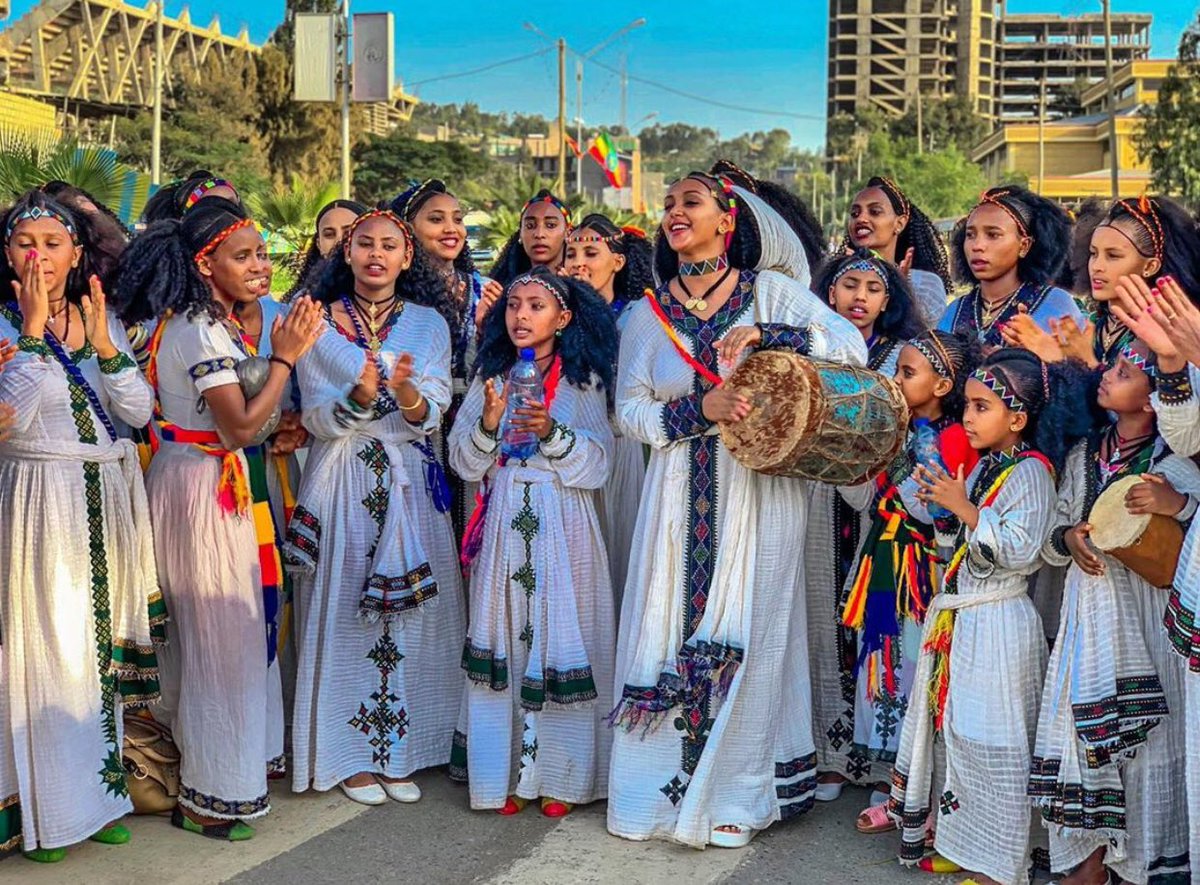
A few days after Buhe's bonfires die down, a very different kind of celebration takes over the streets of Tigray. Groups of girls in bright, hand-embroidered dresses move from neighborhood to neighborhood, drumming and singing, grass tied around their waists like skirts. This is Ashenda a festival that, unlike most of Ethiopia's cultural calendar, belongs entirely to girls and young women.
What Ashenda Marks
Ashenda is celebrated mainly in Tigray, with related festivals under different names Ashendeye, Shadey, Solel across parts of the Amhara region. It marks the end of Filseta, a two-week fast observed by the Ethiopian Orthodox Tewahedo Church in honor of the Virgin Mary's Ascension. Its roots are thought to predate Christianity in Ethiopia by centuries, with some scholars tracing the tradition back to the ancient Axumite era, but over time it has grown into something bigger than its religious origins: a broad cultural celebration of girls, resilience, and community.
Grass Skirts, Embroidered Dresses, and Songs
The festival's name comes from a tall, green grass roughly knee-height that girls gather and tie around their waists, or sometimes drape across their backs, as a kind of skirt. For several days, sometimes stretching to a week or more in rural areas, girls dress in elaborately embroidered white cotton dresses known as tilfi, braid their hair into elaborate styles, and wear jewelry saved specifically for the occasion. There's even an old Tigrinya saying warning against proposing to a girl during Ashenda the idea being that everyone looks their best, so no judgment made in that week can be trusted.
Dressed and ready, groups of girls take to the streets, drumming, singing, and dancing their way through town. One custom catches most first-time visitors off guard: as the girls move through the neighborhood, they'll playfully circle around men they pass and ask for a small payment before letting them continue on. There's no set fee it's symbolic more than anything, and there are songs both for those who pay and cheerful ones for those who don't. Young boys often tag along too, nominally as "bodyguards," though mostly just for the fun of being part of it. By evening, the celebration often spills into concerts and gatherings that run late into the night.
Where and When to See It
Ashenda runs roughly from August 16 to 26 each year, though the exact length varies by location typically three to five days in towns like Mekelle, and considerably longer in rural areas. It's most visible in Tigray, but related celebrations happen in the Lasta and Gonder areas of Amhara, and in Wag Himra and Sekota, where it's known as Shadey.
- When: Roughly August 16-26, varying by region
- Where it's strongest: Tigray (Mekelle, Axum, and the Gheralta region), with related festivals in parts of Amhara
- What to look for: Groups of girls in embroidered dresses and grass skirts, drumming and dancing through the streets, evening concerts
Why Travelers Remember It
Ashenda isn't performed for visitors it's a celebration that takes over public space because the community decides it should, if only for a week a year. Travelers who happen to be in Tigray during the festival often describe it as one of the most memorable parts of their trip, not because it was arranged for them, but because they simply found themselves in the middle of it.
Timing a trip to Tigray around Ashenda? Contact Yama Ethiopia Tours and we'll help you build an itinerary around the festival, along with the region's rock-hewn churches and ancient sites.
Recommended Tour
Northern Historical Tour Packages
Explore the rock-hewn churches of Tigray and the imperial monuments of northern Ethiopia.
View Tour & ItinerarySpread the story