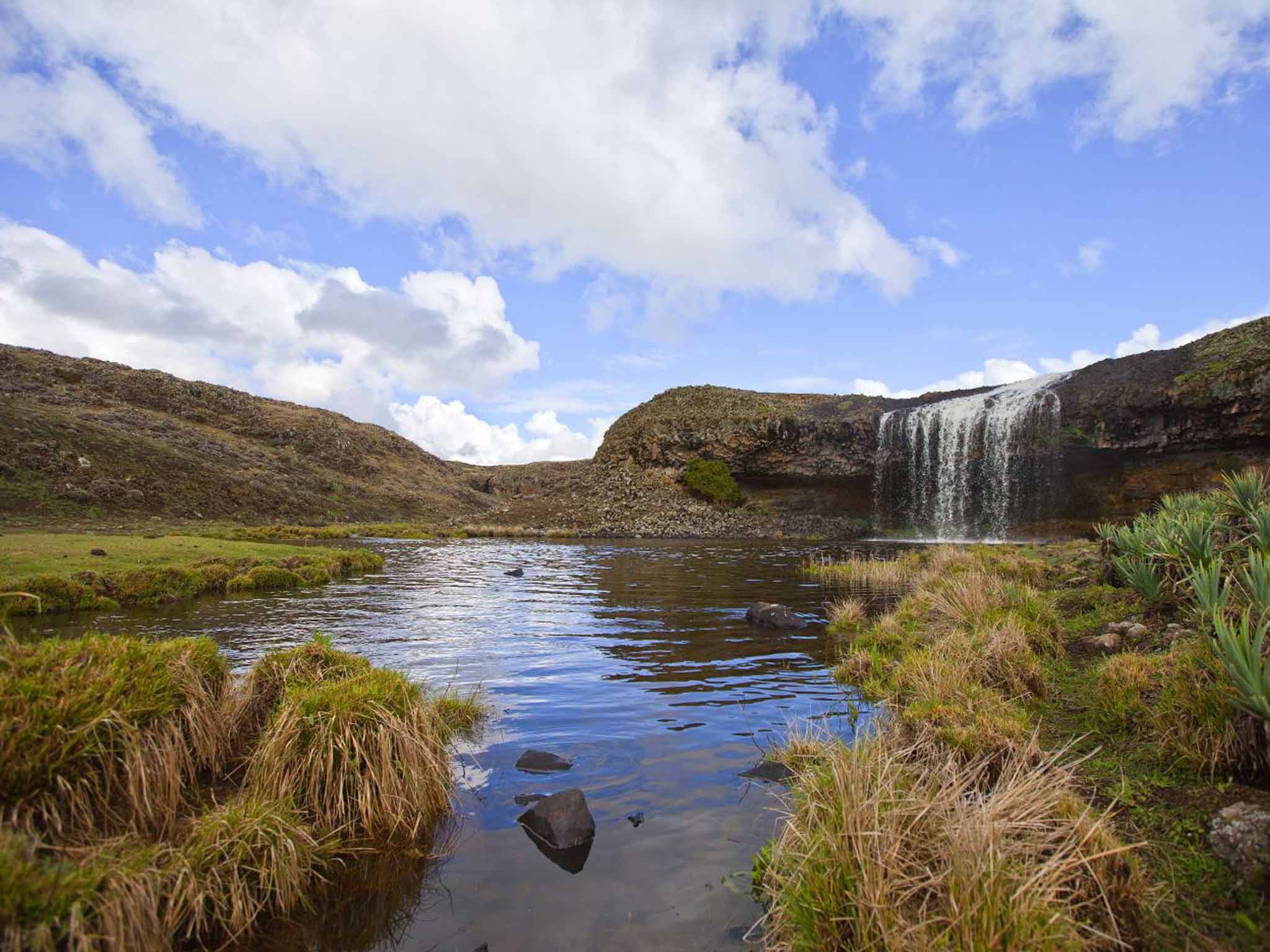
The Bale Mountains tour is, for many visitors, the unexpected highlight of their entire Ethiopia trip. While Lalibela and the Simien Mountains tend to capture the headlines, this extraordinary national park in the south offers something genuinely rare: a wilderness landscape of immense biological richness, trekking routes with dramatically less foot traffic than the north, and the best chance anywhere on earth to see the Ethiopian Wolf in its natural habitat.
Bale Mountains National Park covers roughly 2,200 square kilometres in the Oromia region of southeastern Ethiopia. Its dramatic elevation range from around 1,500 metres in the lowlands to 4,377 metres at Tulu Dimtu, the second highest peak in Ethiopia creates a mosaic of habitats that together hold more endemic species than almost anywhere else in Africa.
The Sanetti Plateau: Wildlife at Altitude
The Sanetti Plateau, at an elevation of 3,800 to 4,100 metres, is the heart of the park and the primary zone for wildlife viewing. The plateau's Afro alpine moorland a rolling expanse of giant heather, lobelia, and tussock grass is the stronghold of the Ethiopian Wolf, Africa's most endangered carnivore. With fewer than 500 individuals remaining in the wild, the Bale population (around 100 to 130 animals) is the largest and most stable in the world.
Dawn drives across the plateau are the best way to see the wolves. They are active hunters in the early morning, targeting the plateau's abundant Afro alpine mole rats their primary prey. A patient hour on the plateau road will often reward you with multiple sightings, sometimes including pup activity near the den sites.
The Sanetti Plateau is also where you'll find the Mountain Nyala, an enormous endemic antelope found only in the Ethiopian highlands. Herds of these dignified animals, with their spiral horns and shaggy neck manes, move through the heather moorland and forest edges throughout the day.
The Harenna Forest: A Wilderness Below the Plateau
Below the plateau on its southern escarpment lies the Harenna Forest one of Africa's largest surviving montane cloud forests and one of its most mysterious. Here the vegetation changes completely, with dense canopy, trailing mosses, orchids, and a dramatically different wildlife community including lion (rarely seen), African Wild Dog, Bale Monkey, and an astonishing variety of forest birds.
The forest is best explored on foot, ideally with at least one night camping inside the tree line to experience the night sounds and the dawn chorus.
Trekking Routes and Practical Tips
- Best time to visit: October through January dry season, excellent wildlife visibility, clear skies for photography
- Main entry point: Dinsho village, about 400 km south of Addis Ababa on the Addis to Goba road
- Recommended duration: Minimum 2 full days for the plateau and Harenna Forest; 4 to 5 days for a proper trekking circuit
- Trekking options: Day drives on the plateau road, guided walks in the forest, multi day horseback treks through the highland zone
- Altitude: Dinsho is at 3,170 m and the plateau is well above 3,800 m take at least one acclimatisation day
- Equipment: Warm layers are essential; temperatures drop sharply after dark even in dry season
The Bale Mountains combine beautifully with the Rift Valley lakes and the Omo Valley in a two week southern Ethiopia circuit. Whether you're a dedicated wildlife watcher, a trekker looking for trails less travelled, or a photographer chasing the extraordinary high altitude light, Bale delivers. Contact our team to put together your ideal Bale Mountains itinerary.
Recommended Tour
7 Days Bale Mountain NP & Rift Valley Lakes
Trek the Sanetti Plateau, explore the Harenna Forest, and spot the rare endemic Ethiopian Wolf.
View Tour & ItinerarySpread the story