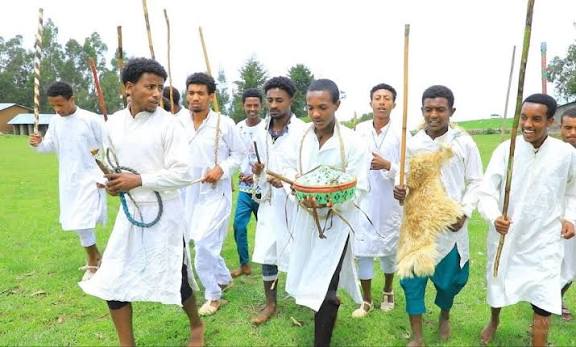
Late August in Ethiopia has a particular sound to it. In the evenings, you'll hear the sharp crack of whips echoing between compounds, growing louder as dusk approaches. A few days later, bonfires light up neighborhood after neighborhood. This is Buhe a holiday that turns ordinary August evenings into something communal, noisy, and warm.
What Buhe Commemorates
Buhe falls on Nehase 13 in the Ethiopian calendar about to August 19 on the Gregorian one and marks the Transfiguration of Jesus on Mount Tabor, a major feast for the Ethiopian Orthodox Tewahedo Church. According to church tradition, shepherd boys were out tending their flocks when a mysterious light appeared on the mountain, and they stayed transfixed well past dusk. Their worried mothers went out looking for them carrying bread and torches, assuming it was still daylight. Nearly every custom tied to Buhe traces back to that story.
The Whip, the Fire, and the Song
In the weeks before the holiday, boys carve forked wooden sticks called jiraf and practice cracking them like whips producing a loud, sharp sound said to echo the thunder that accompanied the vision on the mountain. On the eve of Buhe, neighborhoods gather bundles of sticks into a chibo, a bonfire lit at dusk that symbolizes the divine light revealed that day, and, more practically, the return of clear skies after months of heavy rain.
Then comes the part most Ethiopians who grew up in the highlands remember fondly: groups of boys go door to door singing "Hoya Hoye," a rhythmic call-and-response chant praising the household and wishing them a prosperous year ahead. In return, they're given mulmul a soft, butter-enriched bread baked specially for the occasion or, increasingly in cities, a bit of money instead.
Where and How It's Celebrated
Buhe is observed across the country, but it's strongest in the Amhara and Tigray regions, where community bonfires are often lit near local churches and songs mix Amharic with Ge'ez or Tigrinya. In Addis Ababa and other urban centers, it's more of a neighborhood affair block-level bonfires and churchyard gatherings that bring families out into the street after dark. The tradition has faded somewhat in fast-changing urban areas, but churches and communities have been actively working to keep it alive.
- When: August 19 each year (Nehase 13)
- Where it's strongest: Amhara and Tigray regions, and at the neighborhood level in Addis Ababa
- What to look for: Bonfires at dusk, whip-cracks in the evening air, and groups of boys singing door to door
Why It's Worth Catching
Buhe isn't staged for visitors it's a holiday that happens in courtyards and side streets, not on a stage. If your travel dates land around August 19, an evening walk through a residential neighborhood in Addis Ababa or a smaller highland town is often all it takes to find a bonfire crackling and a group of boys mid-song, whip in hand, working their way toward the next house on the block.
Planning a trip through Ethiopia's highlands this time of year? Contact Yama Ethiopia Tours and we'll help you time your visit to catch Buhe and the rest of Ethiopia's August festival season.
Recommended Tour
Festival Tour Packages
Experience the seasonal bonfires and traditional celebrations of Ethiopia's Orthodox calendar.
View Tour & ItinerarySpread the story