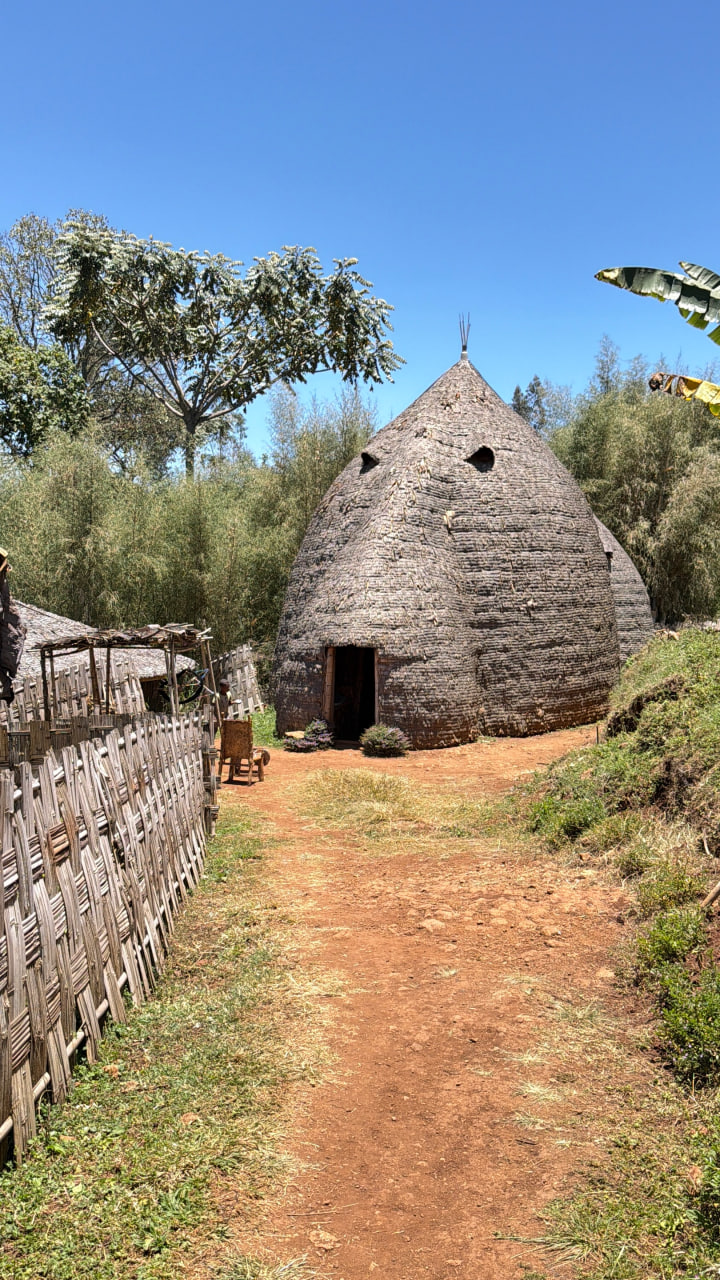
Perched high in the misty Guge Mountains overlooking the sparkling expanse of Lakes Abaya and Chamo, the Chencha highlands are home to the Dorze people. Renowned throughout Ethiopia for their breathtaking organic architecture, master cotton weaving, and ingenious use of the false banana plant, a visit to a Dorze village offers one of the most delightful and culturally rich highland experiences in East Africa.
Organic Architecture: The Famous Elephant Shaped Huts
The iconic huts of the Dorze are unique architectural wonders found nowhere else on earth. Built entirely from locally harvested bamboo stalks, woven bamboo mats, and thatched with enset leaves and thatch grass, these domed structures require no wooden nails or modern building materials. From the outside, the hut's silhouette strikingly resembles the head of an African elephant complete with a rounded brow and an extended conical doorway that mimics an elephant's trunk, paying tribute to the magnificent beasts that once roamed these highland valleys.
The House That Shrinks Over Generations
When freshly constructed, a Dorze hut can soar up to 12 meters (40 feet) high. Because bamboo is planted directly into the rich soil, subterranean moisture and termites gradually consume the lower base over decades. Instead of rebuilding from scratch, the Dorze community gathers together to dig around the perimeter, slice away the decayed base, and simply drop the entire roof structure down into the soil.
As the hut gradually reduces in height over its 60 to 80 year lifespan, its purpose gracefully evolves: starting as a spacious main family home, it later becomes a cozy guest quarters, and eventually serves as a cool storage room, granary, or kitchen.
Enset: The Miracle False Banana Plant
Life in the Dorze mountains revolves around Ensete ventricosum, commonly known as the false banana tree. While its banana like fruit is inedible, every part of the plant is utilized with zero waste. Dorze women expertly scrape the fibrous pseudostem to extract rich starch, which is fermented underground for three to six months in circular earth pits.
The resulting dough is used to bake kocho, a dense, nutrient rich flatbread with a sourdough tang. Freshly griddled over an open clay hearth, warm kocho is customarily paired with golden highland honey, spicy awaze chili paste, and washed down with a sip of home distilled Dorze gin (araki).
Ethiopia's Legendary Master Weavers
The Dorze are celebrated across Ethiopia as premier artisans of traditional cotton weaving. Walking through the village pathways, visitors can hear the steady rhythmic click clack of wooden foot treadle looms. Generations of weavers spin pure Ethiopian highland cotton into stunning textiles, including the delicate netela scarf, the warm winter gabi blanket, and vibrant celebration shawls woven with colorful geometric borders.
Highland Hospitality and Festive Polyphonic Songs
Dorze culture is characterized by warmth, humor, and joyous communal music. Guests are greeted with spirited polyphonic singing, rhythmic clapping, and energetic horn dances around evening campfires under starlit mountain skies. The crisp highland air and sweeping views over the Great Rift Valley lakes create an unforgettable atmosphere of peace and authentic connection.
Visit Chencha and Dorze Village with Yama Ethiopia Tours
Our private cultural safaris to Arba Minch and the southern highlands include immersive overnight stays in traditional Dorze eco compounds, hands on cooking and weaving demonstrations, and guided hikes with certified local guides.
Recommended Tour
4 Days Arba Minch & Surrounding Cultural Tour
Explore the misty Dorze village of Chencha, cruise Lake Chamo's crocodile market, and discover Nechisar National Park.
View Tour & ItinerarySpread the story