Festival tours Ethiopia attract visitors who understand that the country's greatest spectacles are not static they happen in specific places at specific times of year, and experiencing them requires planning. Ethiopia follows its own ancient calendar (the Ethiopian calendar has 13 months and is about 7 to 8 years behind the Gregorian calendar), so most major festivals fall on dates that are not immediately obvious from a standard travel calendar. This guide is designed to help you map your trip to the festivals that matter most to you.
Timkat: Ethiopian Epiphany (January)
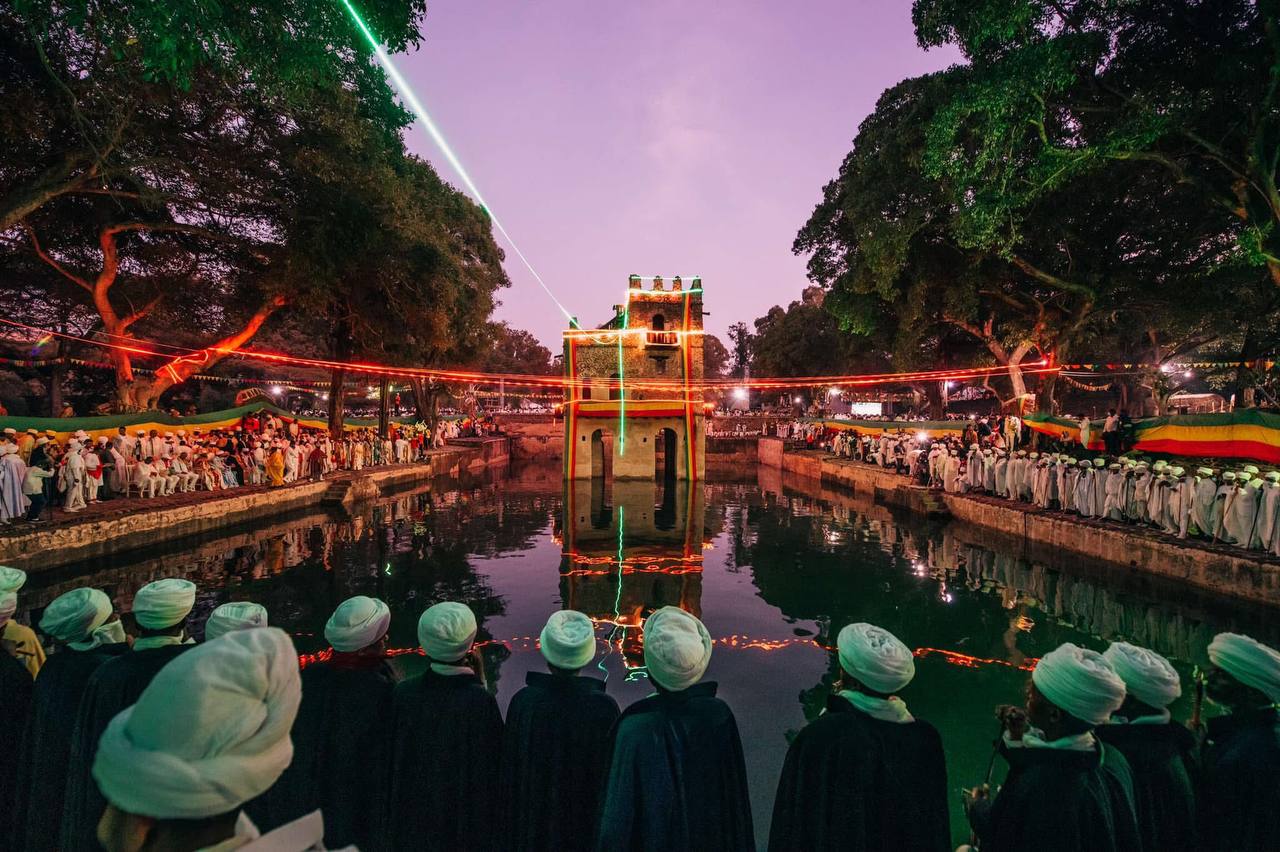
Timkat celebrated in mid January by the Gregorian calendar is the most visually spectacular festival in Ethiopia. It commemorates the baptism of Jesus and involves a two day celebration centred on the carrying of the Tabot (a replica of the Ark of the Covenant) from each church to a nearby body of water, where the water is blessed and worshippers immerse themselves.
The celebration in Gondar at Fasilides Bath is the most famous thousands of white robed pilgrims gather around the medieval bathing pool, priests in their most elaborate ceremonial robes carry the Tabot in procession, and the predawn hours of the main ceremony are lit by torches and punctuated by drums, horns, and chanting. It is genuinely one of the great collective religious experiences available to a traveler anywhere in the world.
Lalibela's Timkat, celebrated at the rock hewn churches, is also magnificent and feels more intimate the processions wind through the narrow church compounds in a way that puts you close to the ceremony.
Meskel: The Finding of the True Cross (September)
Meskel (late September by the Gregorian calendar) celebrates the discovery of the True Cross by Empress Helena in the 4th century. The central ritual is the lighting of a large Demera a bonfire decorated with flowers, torches, and a cross in every town and village square across the country. In Addis Ababa's Meskel Square, the Demera can stand 10 metres high and burns spectacularly as crowds of hundreds of thousands gather around it.
Genna: Ethiopian Christmas (January)
Ethiopian Christmas called Genna falls on January 7th by the Gregorian calendar. While less visually dramatic than Timkat, it is deeply felt: a 40 day fast ends with early morning church services, the wearing of traditional white robes, and family feasts of injera, kitfo, and doro wot. The celebration in Lalibela is particularly atmospheric pilgrims travel for days on foot to reach the rock hewn churches, and the church compounds fill with worshippers who have come from across Ethiopia.
Irreecha: The Oromo Thanksgiving Festival (October)
The Irreecha festival of the Oromo people is one of Ethiopia's largest and most joyful annual celebrations. Held at Lake Hora Arsedi near Bishoftu in early October, it marks the end of the rainy season and the beginning of the harvest period. Hundreds of thousands of Oromo from across the region gather in traditional dress, bringing grass and wildflowers as offerings of thanksgiving. It is one of the few major Ethiopian festivals that is not specifically Orthodox Christian and is a remarkable display of Oromo identity and collective joy.
- Timkat: Mid January | Best in Gondar or Lalibela | Book accommodation 2 to 3 months in advance
- Meskel: Late September | Best in Addis Ababa | Accessible without special planning
- Genna: January 7 | Best in Lalibela | Very crowded; book early
- Irreecha: First weekend of October | Lake Hora Arsedi, Bishoftu | Day trip from Addis
- Enkutatash (Ethiopian New Year): September 11 | National holiday with flowers and singing
Planning a trip around an Ethiopian festival requires lead time, especially for Timkat in Gondar or Lalibela, where accommodation is limited and fills months in advance. The tour packages at Yama Ethiopia Tours include festival timed itineraries that are designed around attendance at these celebrations, including the logistics of transport, accommodation, and guide access for the ceremony itself. Talk to our team early particularly for any January festival to secure your arrangements.
Recommended Tour
Festival Tour Packages
Plan your trip around Timkat in Gondar, Meskel in Addis Ababa, or Genna in Lalibela with all logistics handled.
View Tour & ItinerarySpread the story