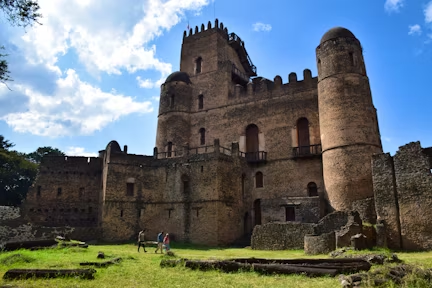
A Gondar tour introduces you to one of Africa's most unexpected architectural surprises. When most people think of medieval castles, they think of Europe but Ethiopia's northern city of Gondar contains a remarkable complex of stone palaces, royal baths, and ceremonial buildings that formed the heart of the Ethiopian empire from the 17th through the 19th centuries. The Fasil Ghebbi, or Royal Enclosure, is a UNESCO World Heritage Site and one of the great wonders of African history.
Gondar served as Ethiopia's capital for over two centuries, and the building programme launched by Emperor Fasilides in the 1630s created a distinctive architectural tradition that blended Axumite, Baroque, and Islamic influences into something entirely its own. Walking through the enclosure feels less like visiting a museum and more like entering a ghost city the scale is extraordinary and the silence carries real weight.
Inside the Royal Enclosure: What You'll See
The enclosure covers about 70,000 square metres and contains six major royal structures built across several generations of emperors. The Castle of Fasilides, the first and most impressive, is a four storey tower with battlements, crenellations, and decorative details that reflect the ambition of the dynasty's founder. The ground floor was used for state functions, the upper floors for private royal apartments.
The Library of Yohannes I sits adjacent, a more intimate building that was one of the most important centres of learning in 17th century Ethiopia. Nearby, the Hall of Iyasu I is remarkable for its wooden ceiling inlaid with ivory, which caught the light of hundreds of oil lamps during imperial banquets.
Outside the main enclosure, the Fasilides Bath is a beautifully preserved royal bathing complex set in a small lake. Every year during Timkat (Ethiopian Epiphany, in January), the lake is filled and blessed, and thousands of pilgrims immerse themselves in the water in one of the most visually spectacular religious festivals in Africa.
Beyond the Enclosure: Debre Birhan Selassie Church
No visit to Gondar is complete without the extraordinary Debre Birhan Selassie church, set at the edge of the city within its own circular compound. The interior ceiling is covered with one of the most famous painted artworks in Ethiopia: row upon row of cherubic faces, painted in ocher and natural pigments, gazing down from above. The walls carry elaborate narrative frescoes depicting scenes from scripture and the lives of the saints. It is a place of startling beauty.
Practical Tips for Your Gondar Visit
- Best time: October through March pleasant temperatures and clear skies for outdoor photography
- Allow: At least one full day for the Royal Enclosure and Debre Birhan Selassie; two days if you want to visit the Qusquam complex and Fasilides Bath properly
- Getting there: Gondar has a domestic airport with regular flights from Addis Ababa; it's also a natural gateway to the Simien Mountains
- Timkat Festival: If your dates align (late January/early February by the Ethiopian calendar), witnessing Timkat at Fasilides Bath is one of the great festival experiences in Africa plan months in advance
Gondar sits at the heart of the Lalibela and Gondar tour circuit that defines northern Ethiopia travel. Most visitors combine it with Axum, Lalibela, and a Simien Mountains excursion the full northern Ethiopia historic route is typically eight to twelve days and covers the sweep of Ethiopian civilisation from the ancient Axumite period through the medieval empire. Our 12 day Simien and northern Ethiopia expedition is a popular option that combines the castle visits with high altitude trekking. Contact us to tailor your itinerary.
Recommended Tour
Bahir Dar, Lalibela and Gondar Northern Historical Route
Witness Gondar's royal castles and the rock-hewn churches of Lalibela as part of our signature historical circuit.
View Tour & ItinerarySpread the story