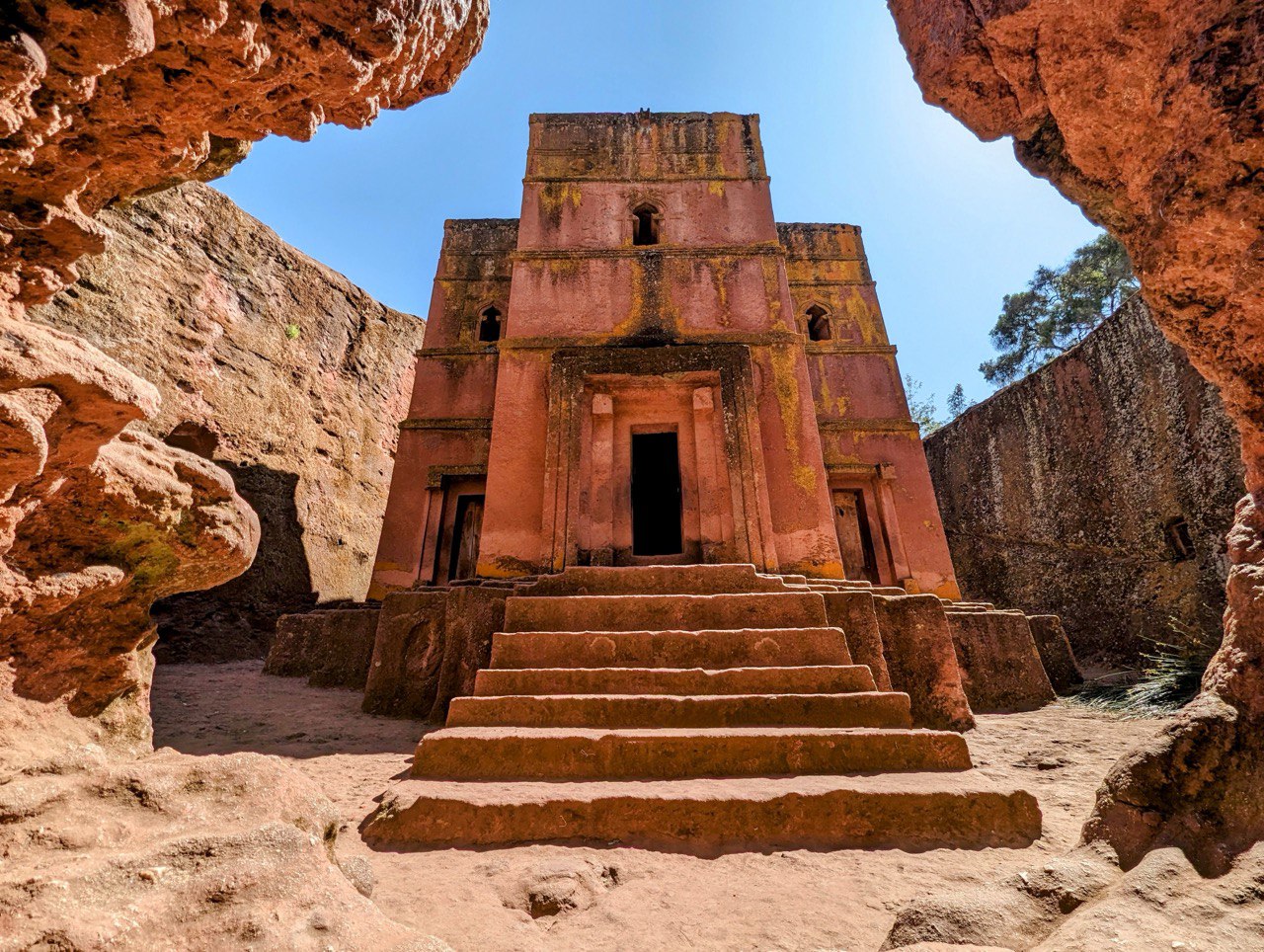
Ethiopia's Bete Giyorgis (Church of Saint George) in Lalibela is widely regarded as the most spectacular of the eleven rock hewn monolithic churches. Carved from a single block of pink volcanic tuff in the shape of a cross, it stands as a testament to the engineering and spiritual devotion of the Zagwe dynasty.
Walking through the narrow, high walled tunnels that connect these churches, one feels a profound sense of stepping back into the 12th century. The air is thick with the scent of incense and the low chant of deacons. For the pilgrims who journey here, these are not just archaeological sites; they are living, breathing houses of worship where the ancient Orthodox traditions are preserved with unmatched fervor.
Carved by Hand and Angels
Legend has it that King Lalibela, after being poisoned by his brother and taken to heaven, returned with instructions from God to build a 'New Jerusalem' in Ethiopia. It is said that while mortal stonemasons worked by day, angels continued the labor by night, completing the task in record time.
Beyond the legends, the architectural reality is staggering. These are not built from the ground up; they are excavated into the bedrock. Every window, every pillar, and every intricate detail was meticulously chipped away from the solid mountain. It is a place of profound silence and deep connection to the 'Ancient Soul' of Ethiopia.
Planning to experience this spiritual marvel yourself? Discover our Lalibela tours for an expert-guided journey through these ancient sanctuaries.
Recommended Tour
7 Days Northern Historical Route Bahir Dar, Lalibela & Gondar
Walk through Lalibela's eleven rock-hewn churches, explore Gondar's royal castles, and cruise Lake Tana on this classic northern Ethiopia circuit.
View Tour & ItinerarySpread the story