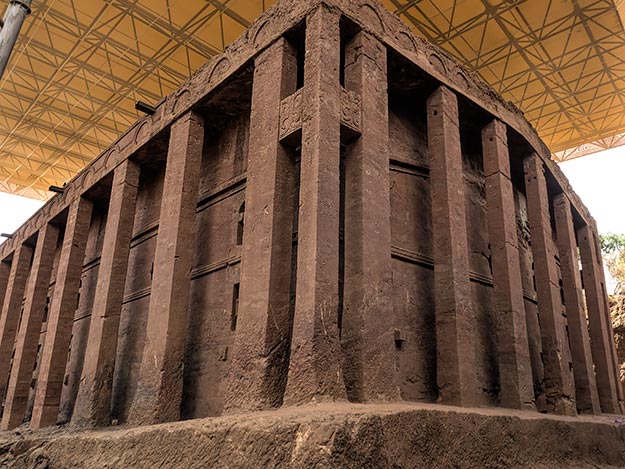
A Lalibela tour sits near the top of almost every Ethiopia travel itinerary, and for good reason. These eleven monolithic churches, carved downward from solid volcanic rock in the 12th and 13th centuries, are among the most extraordinary architectural achievements in human history. They are not ruins they are living, active places of worship, visited by thousands of Ethiopian Orthodox pilgrims every year and tended by priests who have devoted their lives to their care.
Understanding what you're walking into before you arrive makes the experience immeasurably richer. This guide covers the key churches, the best ways to experience them, practical visitor information, and why Lalibela deserves at least two full days of your itinerary.
The Eleven Churches: What to See and In What Order
The churches are divided into two main groups by a seasonal stream, with a third isolated church Bete Giyorgis set apart to the southwest.
The northwestern group is the larger and includes Bete Medhane Alem, believed to be the largest rock hewn church in the world, and the multi storey Bete Maryam, whose exterior is covered in intricate carved crosses, windows, and friezes. Bete Maryam's interior holds some of the oldest surviving frescoes in Ethiopia. Start your first morning here the northwestern group is best in early morning light, and you'll want the quiet before the day's visitors arrive.
The southeastern group includes Bete Amanuel, which local tradition regards as the royal chapel, and Bete Abba Libanos, hewn directly into the cliff face with remarkable precision. The southeastern churches are connected by a network of narrow rock cut tunnels and drainage channels that required extraordinary engineering thinking.
Bete Giyorgis the Church of Saint George is the most photographed and emotionally resonant of all eleven. A perfect Greek cross carved into the top of a deep rectangular pit, it descends 12 metres below the surrounding ground. The approach through the narrow cutting to the church entrance, with its roof of carved crosses visible above you, is one of the great arrival moments in travel.
Practical Tips for Visiting Lalibela
- Best time to visit: October through March for comfortable weather; avoid the main Ethiopian Christmas (Genna, early January) unless you specifically want to witness the extraordinary pilgrimage but book accommodation months in advance
- Dress code: Modest clothing is required shoulders and knees covered. Shoes must be removed before entering each church; bring a small bag for carrying them
- Ticket: A single ticket covers all eleven churches over two consecutive days use both days fully
- Guide: A local guide adds enormous value the oral traditions, liturgical context, and hidden details of the churches are not obvious to uninformed visitors
- Photography: Permitted at most churches except during active services; always ask before photographing priests or worshippers
- Altitude: Lalibela sits at approximately 2,630 metres take it easy on your first day if arriving from lower elevation
Beyond the Churches: Lalibela's Wider Landscape
The town of Lalibela itself is a rewarding place to spend an evening. The main market area and the surrounding villages offer a genuine glimpse of highland Ethiopian life, with the coffee ceremony, injera meals, and conversations with local traders providing warmth and context that complement the grandeur of the churches.
Day trips from Lalibela include the stunning Yemrehanna Kristos cave church, an 11th century building constructed inside a vast natural cave, pre dating Lalibela itself. The drive there passes through highland villages and spectacular valley scenery that is worth the journey even before you reach the church.
Lalibela fits naturally into the northern Ethiopia historic circuit alongside Axum, Gondar, and the Simien Mountains a route that covers the full sweep of Ethiopian history and landscape in eight to twelve days. For a custom arrangement that suits your timeline exactly, contact our team and we'll build the right itinerary around your interests.
Recommended Tour
Bahir Dar, Lalibela and Gondar Northern Historical Route
Visit Lalibela's famous rock-hewn churches, Gondar's castles, and Bahir Dar's Lake Tana monasteries on this classic northern tour.
View Tour & ItinerarySpread the story