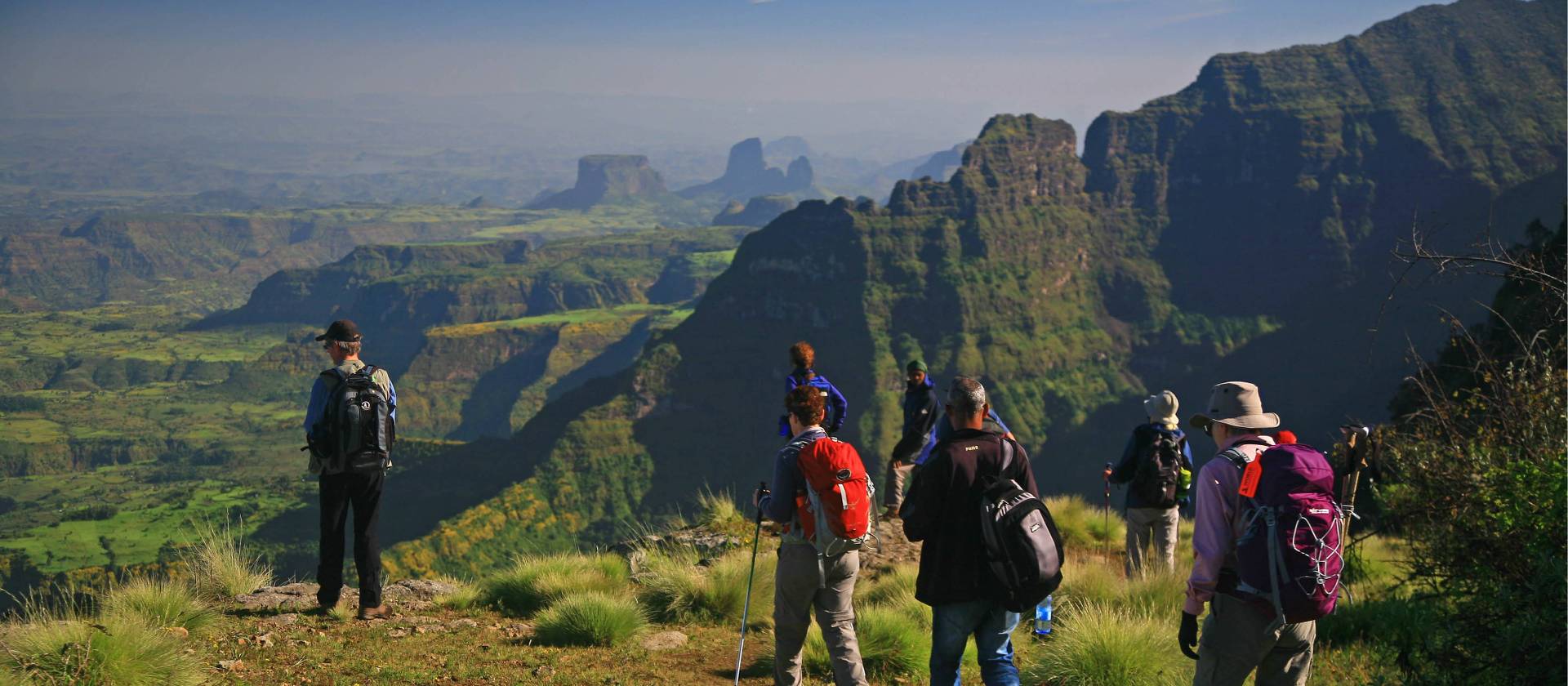
Few experiences in Africa match trekking in the Simien Mountains. This UNESCO World Heritage site in northern Ethiopia offers some of the continent's most dramatic scenery sheer escarpments that drop 1,500 metres, jagged peaks rising above 4,000 metres, and valleys so vast they seem to belong to another planet. If you've been wondering what a Simien Mountains tour actually involves, this guide covers everything from routes and fitness requirements to the wildlife you'll encounter along the trail.
The Simien Mountains are accessible year-round, but the experience changes significantly with the season. The dry months (October through February) offer clear skies, crisp air, and the best trail conditions. The wet season (June through September) brings lush greenery, wildflowers in bloom, and far fewer fellow trekkers but also muddy trails and limited visibility on the high ridges.
Main Trekking Routes in the Simien Mountains
The most popular starting point is Sankaber, about 40 kilometres north of Gondar on the Debark road. From here, the classic route heads east along the escarpment edge, with overnight camps at Geech, Chenek, and for those aiming for the summit Ambiko and Ras Dashen itself at 4,550 metres, the highest peak in Ethiopia.
Short Treks (2 to 3 days)
The Sankaber to Geech section is suitable for moderately fit hikers and gives a superb first taste of the Simien landscape. You walk along the cliff edge with near-constant views of the escarpment, and Gelada baboon encounters are virtually guaranteed. This is the ideal option for those joining the broader northern Ethiopia touring circuit and adding a trekking component without committing to a full week in the mountains.
Long Treks (5 to 9 days)
The complete traverse to Ras Dashen is a serious undertaking requiring good fitness, acclimatisation awareness, and the right equipment. Our 12 day Simien Mountains trekking expedition builds in adequate acclimatisation days and covers the full escarpment circuit, giving you time to truly absorb this extraordinary landscape rather than racing through it.
Wildlife on the Trail
The Simien Mountains are home to three of Ethiopia's most charismatic endemic species. Gelada baboons are seen daily on virtually every route bands of several hundred are common, and they are remarkably habituated to human presence. The Walia Ibex, a magnificent cliff-dwelling antelope found only in the Simien, frequents the rocky outcrops around Chenek. The Ethiopian Wolf, Africa's rarest canid, is sometimes seen on the high moorlands above 3,500 metres.
For hikers with binoculars, Lammergeyer (Bearded Vulture) and Verreaux's Eagle are regularly seen riding the thermals above the escarpment. The birdlife alone would make the trek worthwhile.
Practical Trekking Tips for the Simien
- Fitness level: Moderate to challenging daily walks of 12–20 km with significant elevation gain
- Altitude awareness: Sankaber sits at 3,260 m; Ras Dashen is at 4,550 m take acclimatisation seriously
- Best months: October about February for clear skies; June–September for wildflowers and solitude
- Clothing: Layering is key mornings are cold (near freezing at altitude), afternoons can be warm and sunny
- Equipment: Trekking poles, quality sleeping bag (rated to -5°C or below for high camps), waterproof jacket
- Scout and guide: Required by the park authority both add significantly to the experience
- Camping vs. lodges: Simple lodges exist at Sankaber and Chenek camping is required for most routes beyond Geech
Trekking the Simien Mountains is one of Ethiopia's truly unmissable experiences. Whether you have three days or nine, the combination of dramatic landscape, endemic wildlife, and the sheer physical achievement of walking these ridges will stay with you long after you return home. Contact our team to design your ideal Simien trekking itinerary.
Recommended Tour
12 Days Special Trekking Simien Mountains
Trek through the Simien Mountains National Park, climb to the summit of Ras Dashen, and experience endemic wildlife like the Gelada Baboon.
View Tour & ItinerarySpread the story