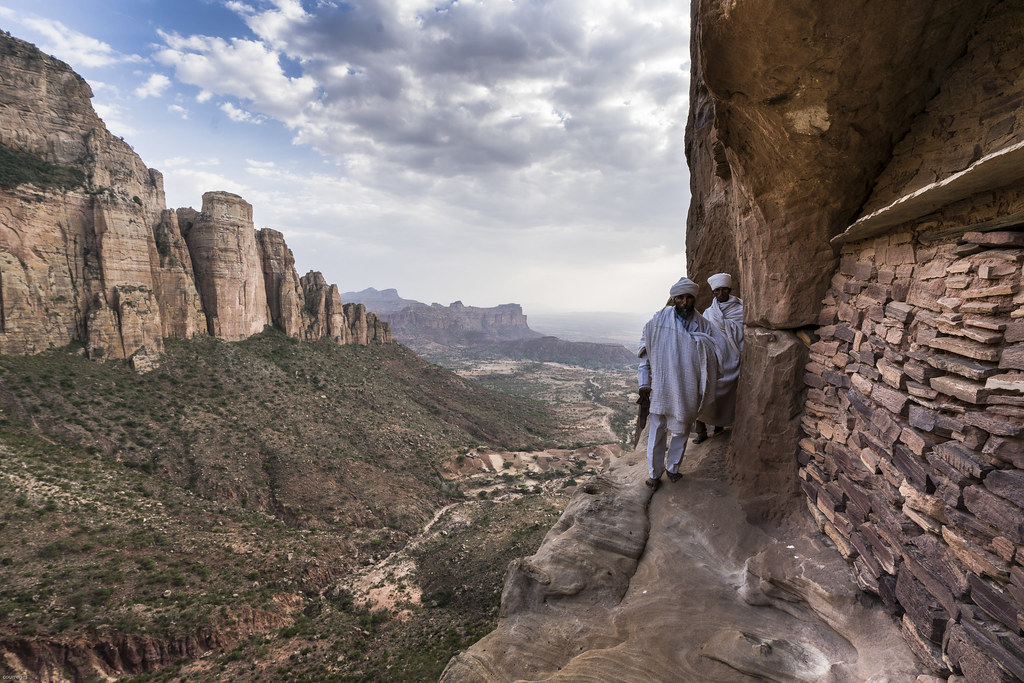
A Tigray churches tour takes you to some of the oldest and most extraordinary places of Christian worship in the world and some of the least visited. While Lalibela commands international recognition, the rock hewn churches of Tigray in northern Ethiopia predate Lalibela by centuries and offer an experience of comparable architectural wonder combined with a level of remoteness and physical challenge that most visitors find genuinely memorable.
There are estimated to be over 120 rock hewn churches in Tigray, scattered across the region's dramatic landscape of sandstone massifs and river gorges. Many require serious hiking or climbing to reach. Some are accessible to moderately fit visitors; others demand a comfort with heights that borders on the technical. All of them, once reached, deliver an encounter with early Christian devotion that is deeply moving.
The Gheralta Cluster: Where the Climbing is Worth It
The Gheralta massif east of the town of Hawzen concentrates the most spectacular and accessible of the Tigrayan churches. Abuna Yemata Guh is the most famous: perched at the top of a vertical sandstone pillar, it requires a 45 minute climb involving a section of genuine rock face handholds carved into the cliff by generations of priests. The interior frescoes, painted in natural pigments around the 15th century, are extraordinarily well preserved in the dry cave environment. The view from the entrance across the Tigray plains is itself worth the climb.
Maryam Korkor is a larger church that requires a long but less technical hike, and its interior holds some of the finest ecclesiastical art in Ethiopia painted ceilings, carved columns, and the smell of centuries of incense embedded in the rock. Daniel Korkor, nearby, is dramatically positioned on a cliff edge with sweeping views in all directions.
Other Essential Tigray Churches
Beyond Gheralta, the Tigray churches fall into several other clusters worth exploring. The Atsbi region to the east holds Petros and Paulos, another cliff face church with remarkable interior art. The Teka Tesfai cluster in the central highlands offers accessible family friendly hikes with rewarding churches at the end. Wukro Chirkos, close to the town of Wukro, is one of the most easily accessible and a good starting point for first time visitors to Tigrayan church architecture.
Practical Tips for Tigray Church Visits
- Physical fitness: Range widely from easy walks to serious cliff climbing, depending on the church selected
- Essential: A local guide is non negotiable without one, finding the churches and understanding the context is impossible
- Footwear: Solid hiking shoes or boots with good grip; sandals are unsuitable for the cliff churches
- Dress code: Modest clothing required; shoes removed inside each church
- Best time: October through March dry conditions make the hikes manageable; avoid the long rains (June to August) when rock faces can be dangerous
- Donation: Leave a small donation at each church to support the priests and maintenance
- Combine with: Axum (2 hours by road) makes a natural companion stop
Tigray's churches belong on the itinerary of anyone who has already visited Lalibela and wants to go deeper into Ethiopian ecclesiastical heritage or anyone who prefers a more adventurous, off the beaten track alternative to the better known sites. The northern Ethiopia tour packages from Yama can be customised to include the Gheralta cluster alongside Axum and the Simien Mountains. Contact us to plan your Tigray church expedition.
Recommended Tour
Northern Ethiopia Tour Packages
Explore the rock-hewn cliff churches of Tigray's Gheralta cluster, along with Axum, Lalibela, and Gondar.
View Tour & ItinerarySpread the story