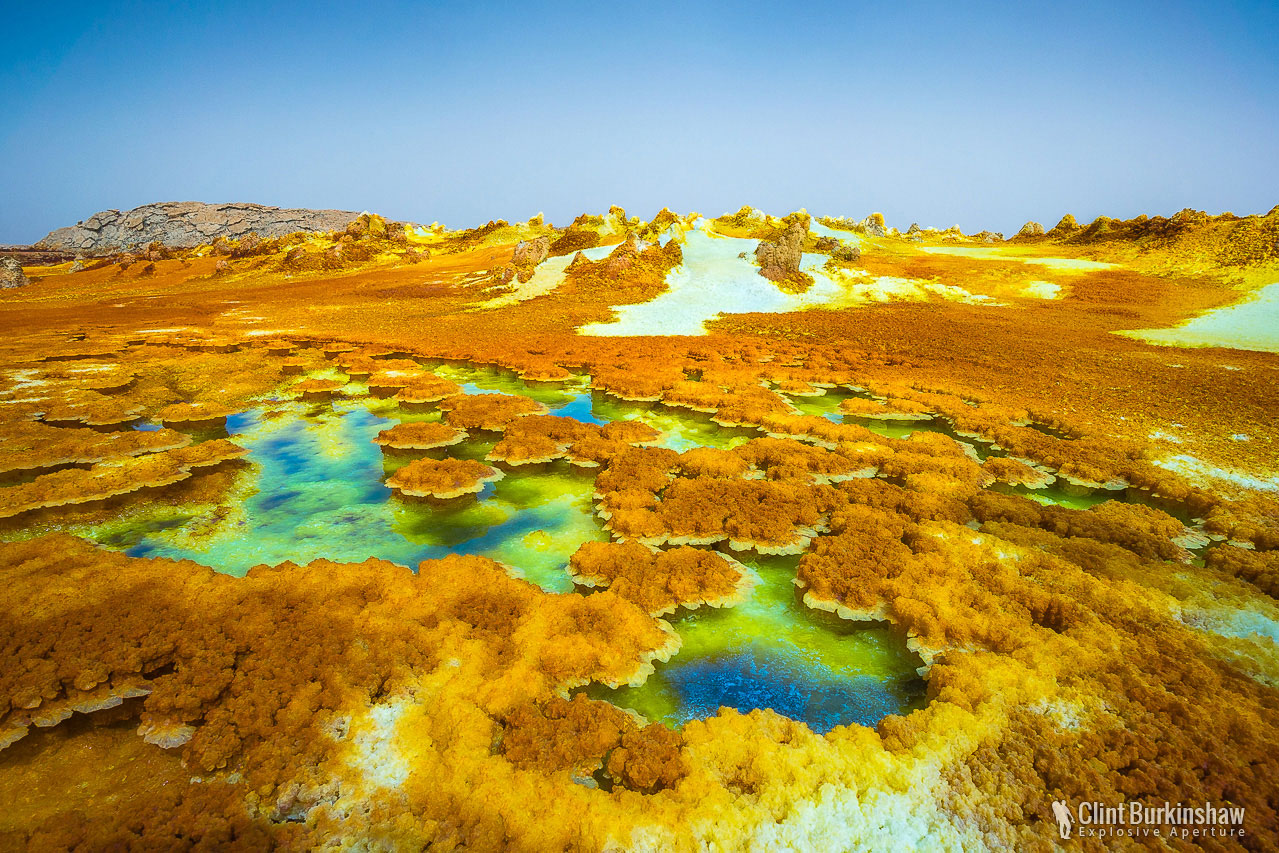
The Danakil Depression is not a typical travel destination. At roughly 130 metres below sea level, with summer temperatures regularly exceeding 50°C, it holds the distinction of being one of the hottest and most geologically active places on earth. A Danakil Depression tour is, without question, one of Ethiopia's most extreme and unforgettable adventure travel experiences but it is also one that requires honest preparation and the right operator.
If you've been researching this trip and wondering what it's genuinely like on the ground, this guide covers the reality: the heat, the logistics, the extraordinary landscapes, and the moments that make the effort completely worthwhile.
The Landscape: A Geological Spectacle
The Danakil is where three tectonic plates the African, Arabian, and Somali are slowly pulling apart, creating one of the most active volcanic and hydrothermal systems on the planet. The result is a landscape that looks like no other place on earth.
At Dallol, hydrothermal vents have created a bizarre terrain of salt chimneys, acid pools, and neon colored mineral deposits in electric yellows, greens, and oranges. It is a completely alien environment surreal, beautiful, and chemically hostile. Photography here is extraordinary, but you need to move carefully and follow your guide's instructions about safe footing.
The Erta Ale volcano is the centrepiece of most Danakil tours. After a night walk across black lava fields under a sky blazing with stars, you reach the crater rim at dawn or midnight depending on your itinerary and look down into an active lava lake. The sight of molten rock churning and glowing in the darkness is one of the most primal experiences travel can offer. Standing at the edge of a lava lake is genuinely moving.
The Honest Reality: Heat and Logistics
You need to go into a Danakil tour with clear expectations. The heat is relentless and genuine not uncomfortable on a summer day heat, but a dry, pressing intensity that demands hydration discipline and sensible scheduling. Most serious activity happens in the early morning and at night to avoid the worst of the midday sun.
- Best time to visit: November through February, when temperatures are at their lowest still very hot, but manageable
- What to bring: At least 4 litres of water per day, electrolyte sachets, lightweight loose fitting clothing, high SPF sunscreen, headlamp for night hikes
- Physical fitness: Moderate the Erta Ale walk is 15 km round trip over uneven lava rock, typically done at night
- Accommodation: Basic camp shelters at Erta Ale base camp; simple guesthouses in Hamedela and Ahmedela. Comfort is minimal by design
- Safety: Always travel with a licensed, experienced operator who works with armed scout escorts
The Afar salt miners you'll encounter on the way are among the most compelling human stories in the region. For generations, they have cut blocks of solid salt from the lake bed and loaded them onto camels for trade a practice unchanged for centuries. Witnessing this at dawn, with camel trains disappearing into the distance across a white salt flat, is one of those images that defines Ethiopia's extraordinary depth.
Who Is This Trip For?
The Danakil Depression attracts adventure travelers, photographers, geologists, and anyone with a genuine curiosity about the earth's processes and human endurance. It is not a trip for travelers who need comfort or predictability but for those who can embrace the extremes, it delivers experiences of a completely different order.
Our 6 day Danakil Depression tour is designed to cover the key sites Dallol, the salt lake, Erta Ale, and the nearby hot springs with enough time at each location to absorb what you're seeing rather than rushing. It combines naturally with the rest of the northern Ethiopia historic circuit, allowing you to pair this extreme adventure with Axum, Lalibela, and Gondar in a single comprehensive trip.
If the Danakil Depression is on your radar, don't put it off indefinitely. The volcanic activity and geology here are always changing. Reach out to our team and we'll design the right itinerary for your fitness level, available time, and travel style.
Recommended Tour
6 Days Danakil Depression Special Trip
Explore the alien landscapes of the Danakil Depression, Dallol, and the boiling lava lake of Erta Ale volcano.
View Tour & ItinerarySpread the story